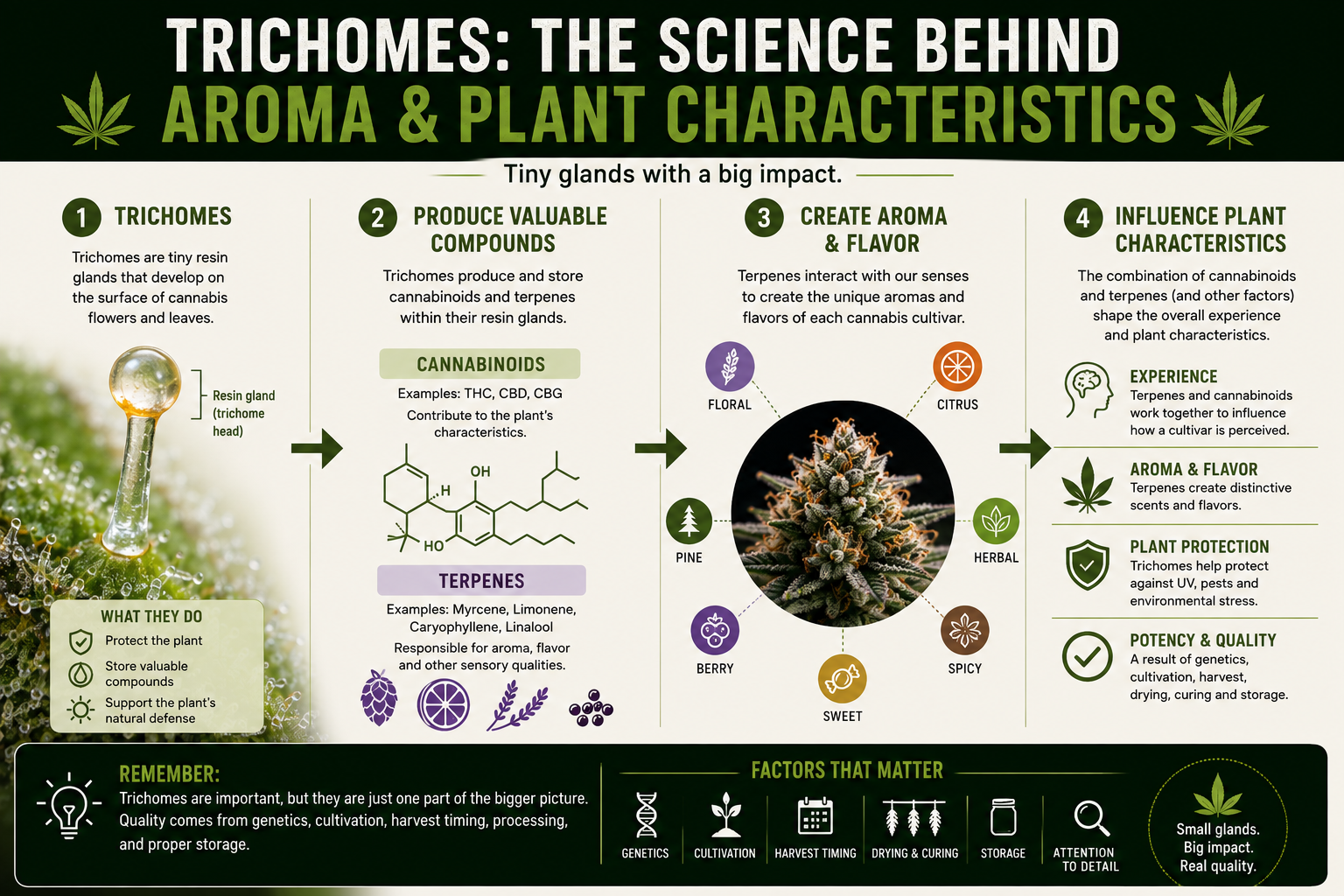
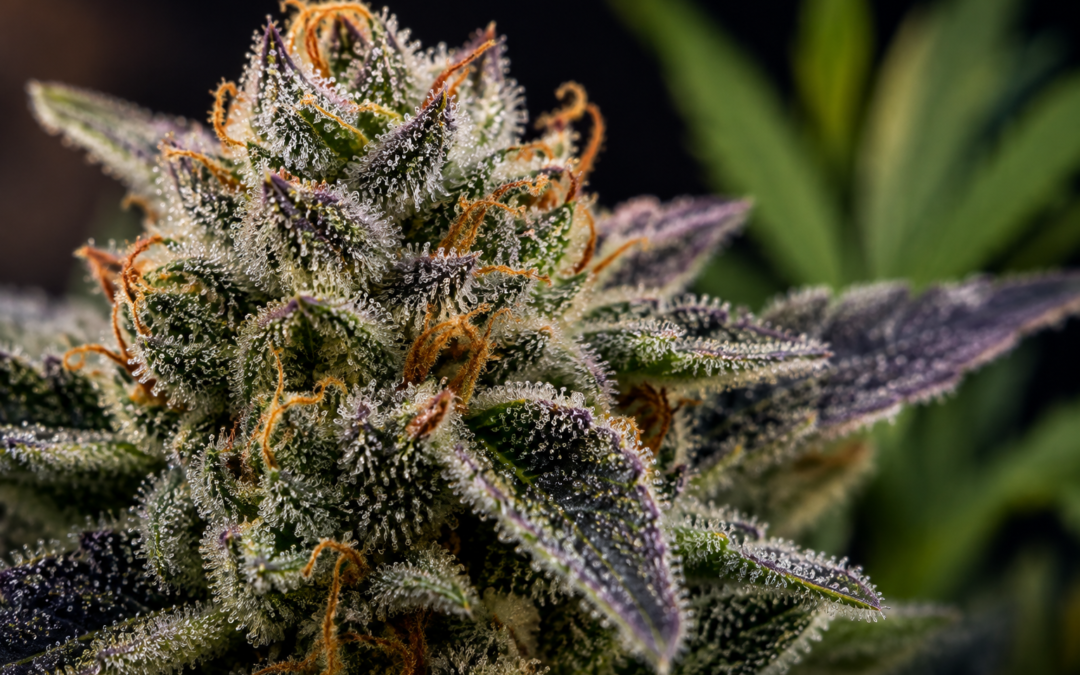
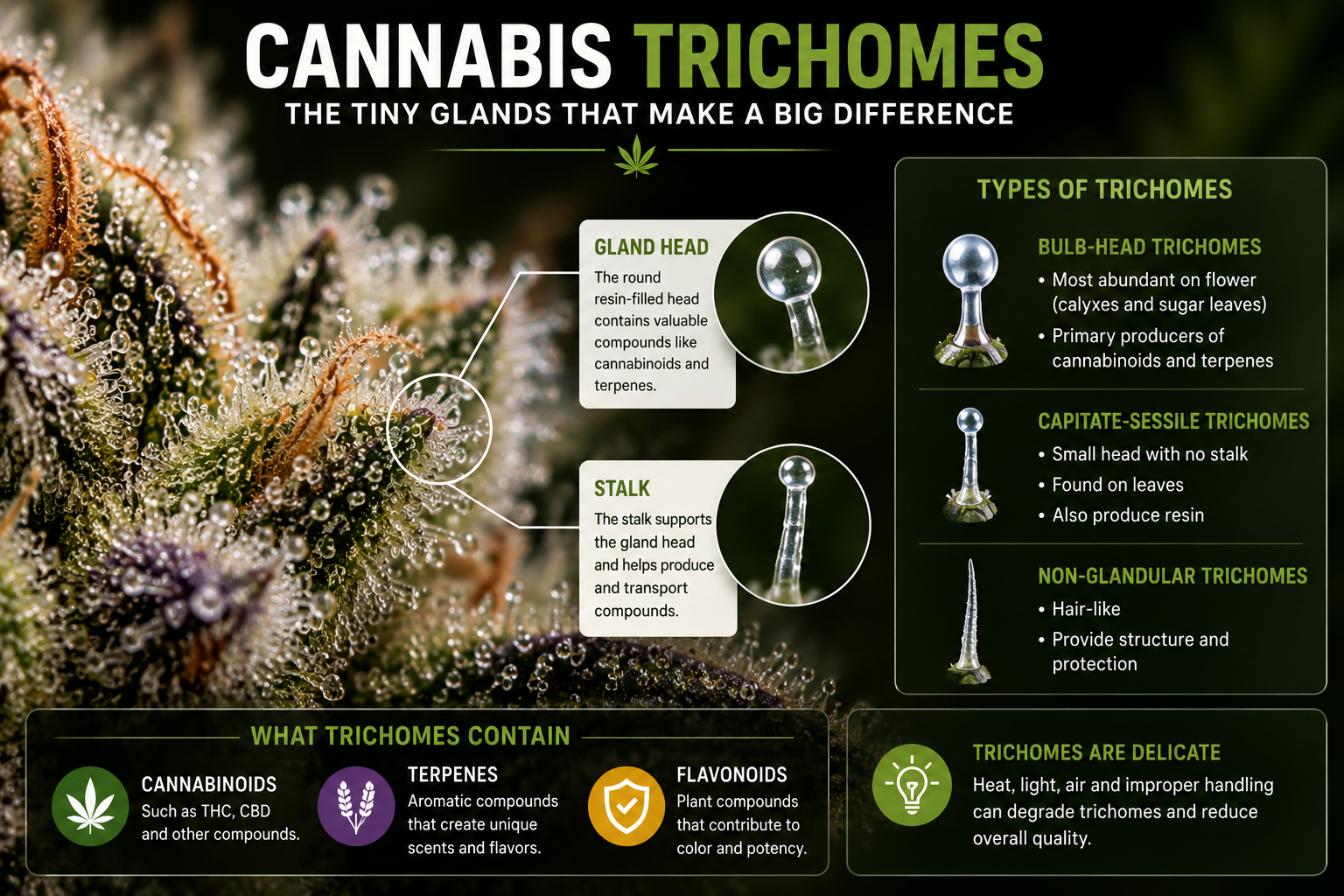
Cannabis trichomes are the tiny, crystal-like structures that cover the surface of cannabis flowers and some leaves. Under magnification, these structures can look like miniature translucent glands. Although they contribute to the frosty appearance associated with many cannabis cultivars, their importance goes far beyond appearance.
Trichomes contain many of the compounds associated with the plant’s characteristics, including cannabinoids and aromatic terpenes. Terpenes contribute to recognizable aromas that may be described as citrusy, floral, earthy, pine-like, herbal, or spicy. This is one reason evaluating cannabis flower involves more than simply looking at THC percentage.
Why Cannabis Trichomes Matter
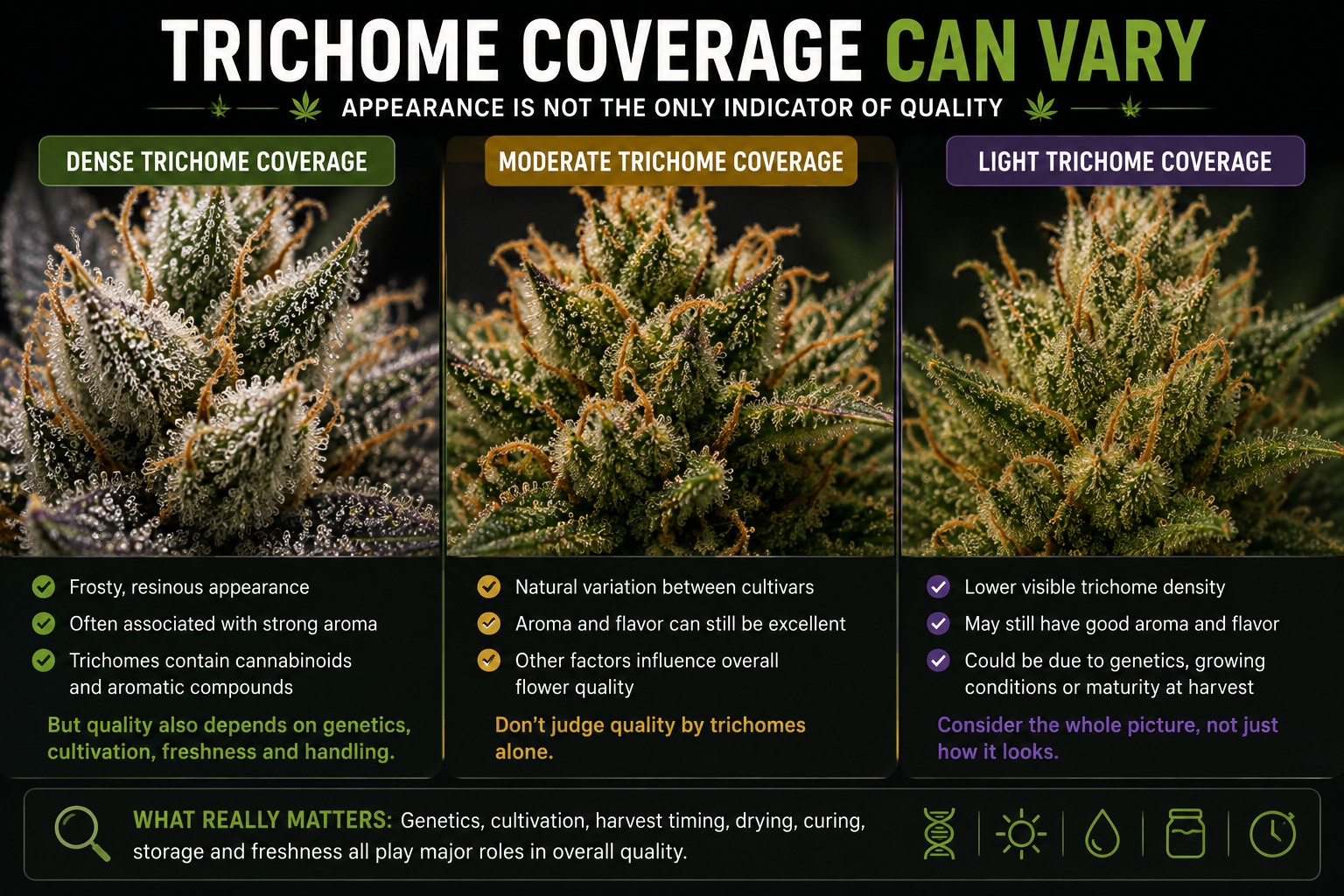
The amount and appearance of cannabis trichomes can vary considerably between cultivars. Genetics play an important role, while cultivation conditions, plant maturity, harvest timing, handling, drying, curing, and storage can also influence the final characteristics of the flower.
A flower covered with visible resin glands may look impressive, but trichome coverage alone should not automatically be interpreted as proof of superior quality. Aroma, freshness, genetics, cultivation practices, storage conditions, and overall flower condition should be considered together.
Readers interested in aroma can also explore our guide to cannabis terpenes and what makes cannabis smell
Trichomes, Freshness and Storage
Cannabis trichomes and their associated compounds can be affected by environmental conditions after harvest. Excessive heat, light, air exposure, and poor storage may contribute to changes in aromatic compounds over time. Proper storage therefore plays an important role in preserving the characteristics of dried flower.
This connects with a broader shift in how consumers understand cannabis quality. Instead of focusing on a single number, such as THC percentage, consumers can learn to consider genetics, terpene profiles, freshness, appearance, aroma, and handling together.
Read our guide explaining why cannabis consumers are looking beyond THC percentage for a deeper look at these quality factors.