
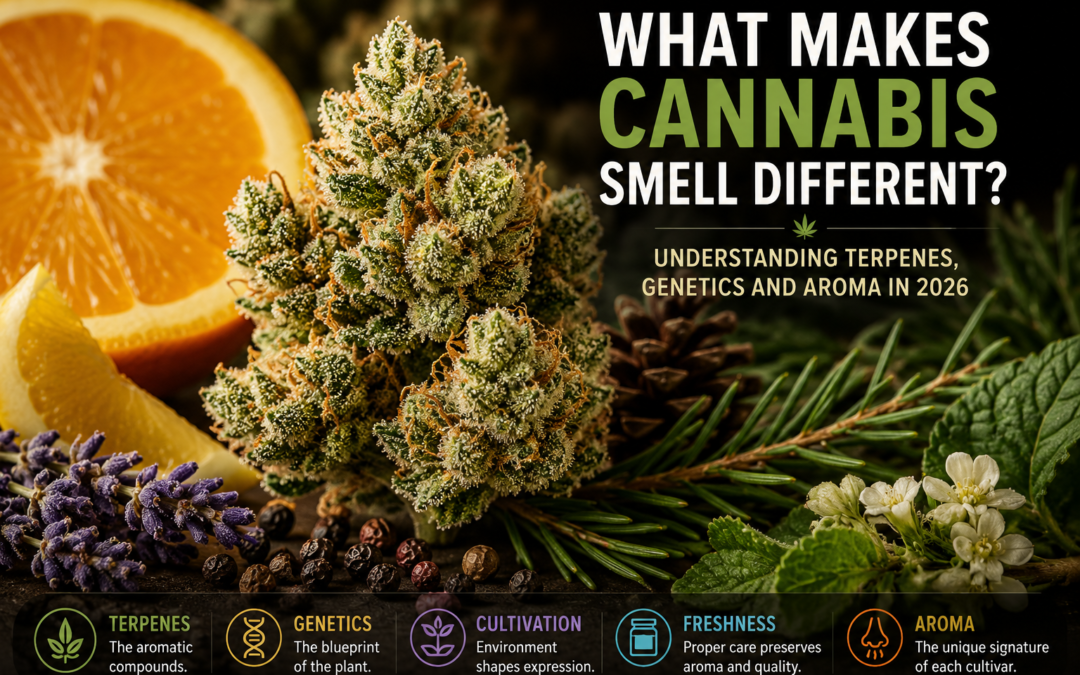
Cannabis terpene profiles are one of the main reasons different cannabis cultivars can have remarkably different aromas. Some may have citrus, pine, floral, earthy or spicy characteristics, while others produce more complex combinations. In 2026, understanding these differences means looking beyond a single compound and considering genetics, terpenes, cultivation and freshness together.
What Are Cannabis Terpene Profiles?
Terpenes are aromatic compounds found throughout nature. They occur in many plants and contribute to recognizable scents. Cannabis can contain numerous terpenes in different concentrations, creating distinctive aromatic profiles.
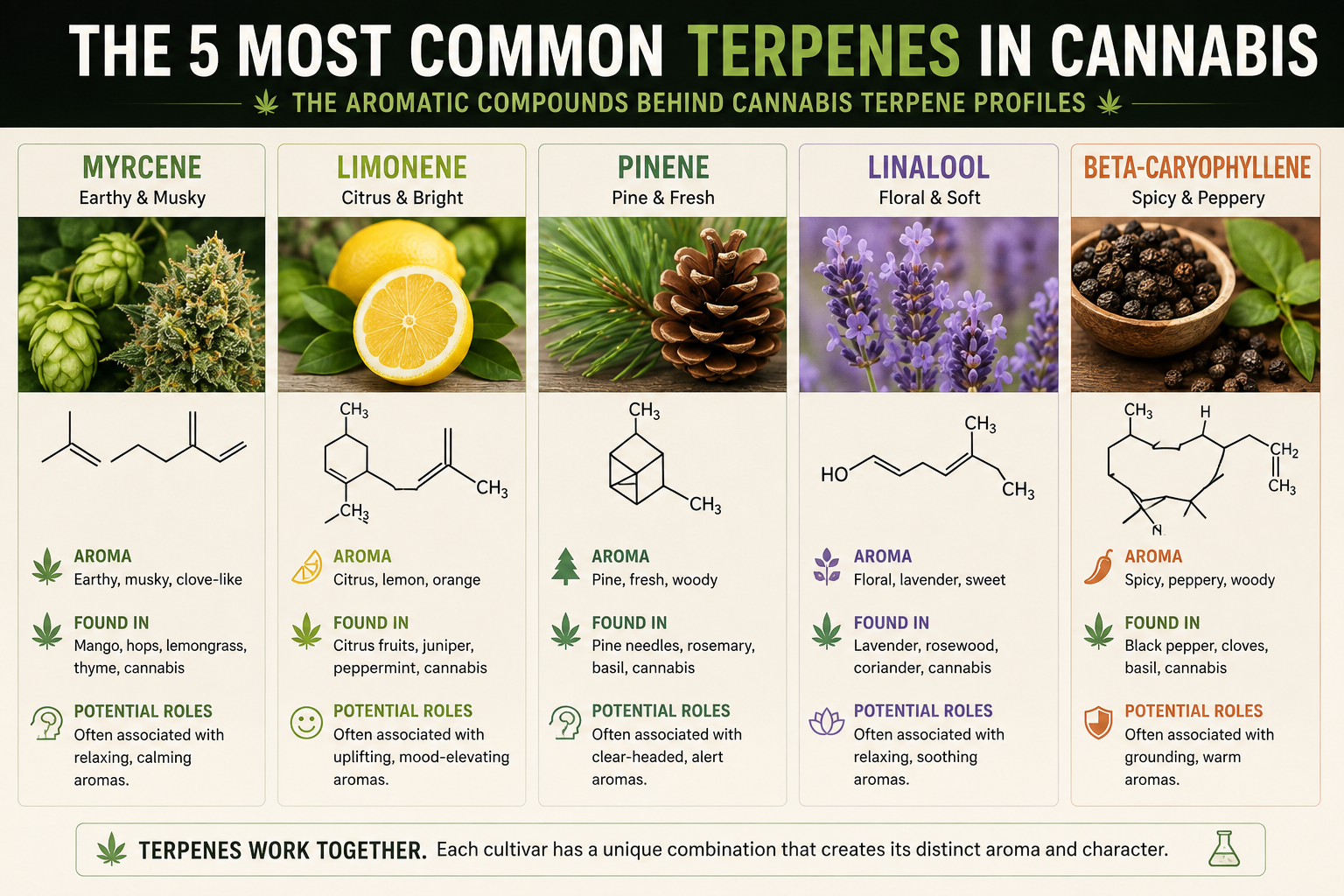
Common examples include myrcene, often associated with earthy aromas; limonene, associated with citrus; pinene, associated with pine-like aromas; linalool, which can have floral characteristics; and beta-caryophyllene, commonly associated with spicy or peppery notes.
How Genetics Influence Cannabis Aroma
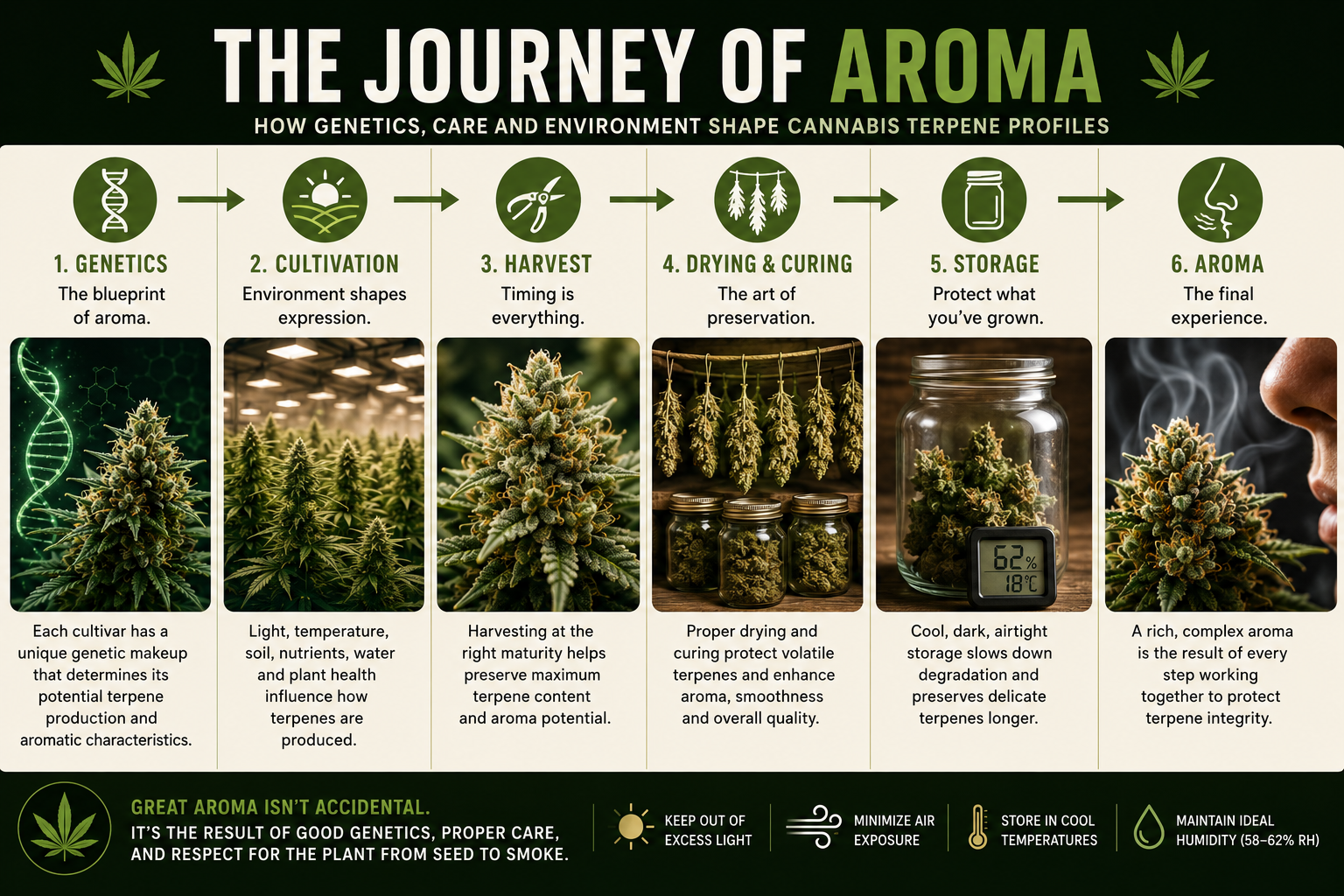
Genetics establish much of a plant’s potential chemical profile. Different cultivars can naturally produce different combinations of aromatic compounds.
However, genetics are only part of the picture. Growing environment, plant health, harvest timing and other cultivation variables can influence how those characteristics are expressed.
This helps explain why plants sharing similar genetics do not necessarily have identical aromas.
Freshness, Drying and Storage Matter
Terpenes are volatile compounds, meaning some can be lost or altered over time. Post-harvest handling therefore matters when evaluating aroma.
Heat, light, oxygen and unsuitable storage conditions may affect aromatic compounds. Drying, curing and subsequent storage can consequently influence how well the original characteristics are preserved.
This is also why freshness should be considered alongside cannabis terpene profiles when discussing overall flower characteristics.
Terpenes Are Only Part of Cannabis Quality
A strong aroma should not automatically be interpreted as proof of quality, potency or a particular effect. Terpene information is most useful when considered alongside genetics, cannabinoid composition, freshness, cultivation practices and appropriate laboratory testing.
As cannabis education develops, understanding cannabis terpene profiles provides a more complete way to discuss why cultivars smell different without reducing a complex plant to a single number.
Scientific research continues to investigate the chemistry and biological roles of cannabis constituents.