
Cannabis Freshness: Why It Matters
Cannabis freshness is about much more than how recently flower was harvested. Genetics and cultivation establish the plant’s characteristics, but drying, curing, packaging, handling and storage can influence what happens after harvest.
Cannabis flower contains cannabinoids, terpenes and numerous other compounds. These compounds do not necessarily remain unchanged indefinitely. Research examining cannabis during storage has found that time and environmental conditions can alter its chemical composition.
That makes freshness one part of a much bigger quality picture.
Instead of judging flower using only THC percentage or appearance, a more informed approach considers genetics, aroma, terpene profile, trichomes, storage history and overall condition.
What Affects Cannabis Freshness?
Several environmental factors can influence cannabis after harvest.
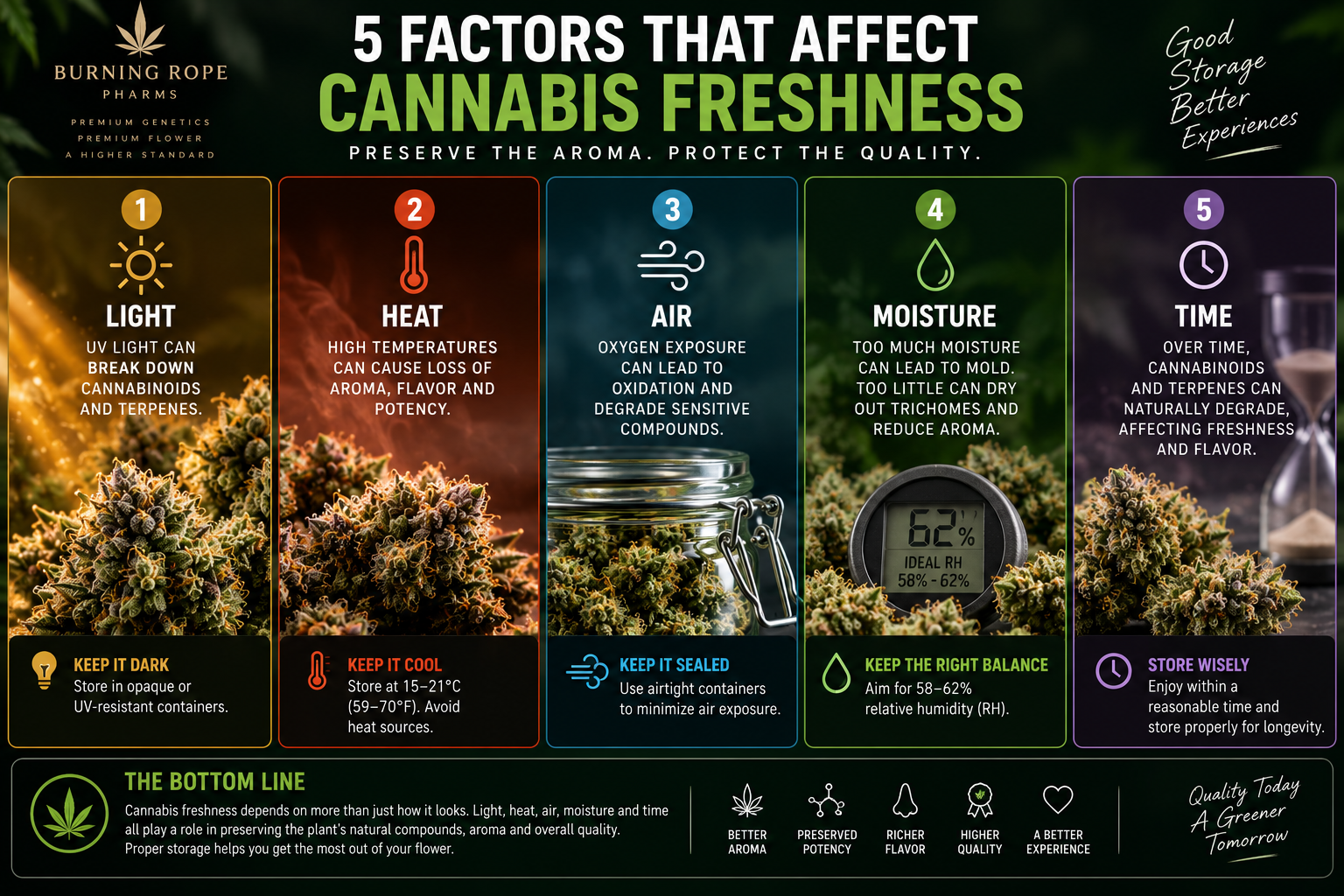
1. Light
Light is an important consideration during storage. Research has documented cannabinoid changes under different combinations of light, temperature and storage duration. An early stability study identified light exposure as an important contributor to cannabinoid loss, while later long-term research also demonstrated differences between storage environments.
This is one reason storage conditions matter when discussing cannabis freshness.
2. Temperature
Temperature also influences chemical stability.
A study examining dried cannabis at temperatures ranging from −20°C to 40°C found temperature-dependent degradation patterns among cannabinoids. Another long-term study found substantial compositional changes under some room-temperature storage conditions.
The important takeaway for consumers isn’t that there is one perfect temperature for every cannabis product. Different products and compositions can behave differently.
3. Air and Oxygen
Exposure to air is another factor.
Cannabis compounds can undergo oxidation during storage, and historical stability research found that air oxidation contributed to chemical changes. Packaging and storage conditions therefore form part of the overall freshness equation.
4. Moisture and Humidity
Moisture needs to be considered from a quality and safety perspective rather than simply assuming that “more moisture means fresher.”
Excessive moisture can contribute undesirable conditions, including mold risks. Professional storage guidance consequently considers humidity alongside temperature and light.
5. Time
Finally, there is time itself.
Cannabis does not become chemically frozen after curing. Studies following cannabis materials for extended periods have documented changes in cannabinoid composition under different storage conditions.
Cannabis Freshness and Terpenes
Freshness isn’t only about cannabinoids.
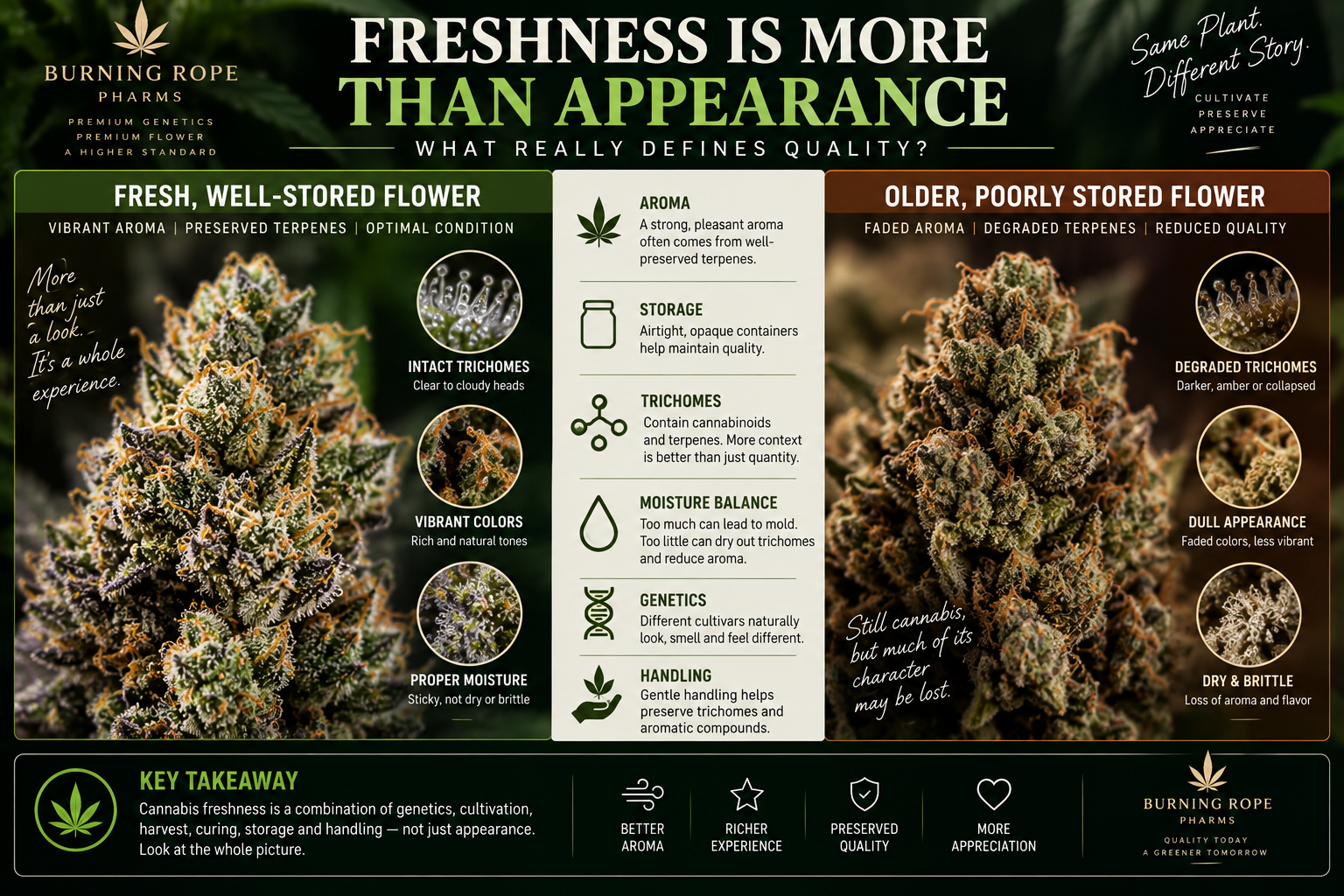
Terpenes and other volatile compounds contribute significantly to cannabis aroma. Depending on genetics and chemistry, these aromatic profiles can contain citrus, floral, herbal, pine-like, spicy and other sensory characteristics.
Because many aromatic compounds are volatile, post-harvest conditions matter. Scientific literature identifies factors such as light, heat and oxygen as relevant to the stability of terpenes and other volatile compounds.
What Do Trichomes Tell Us?
Trichomes are the tiny glandular structures responsible for much of the resinous appearance of cannabis flowers. They are associated with cannabinoids, terpenes and other compounds.
A heavily frosted flower can certainly be visually striking, but visible trichome coverage should not become another version of the “highest THC must be best” mentality.
Quality is multidimensional.
Why THC Percentage Doesn’t Tell the Whole Story
THC percentage provides a specific piece of chemical information, but it cannot tell a consumer everything about a flower.
It doesn’t independently describe its complete terpene profile, freshness, genetics, aroma, storage history, curing quality or sensory characteristics.
This is why evaluating cannabis solely by the largest THC number can oversimplify a much more complicated plant. why consumers are looking beyond THC percentage
Storage Is Part of the Quality Story
Research continues to demonstrate that post-harvest handling matters. A recent scientific review covering cannabis from cultivation through storage concluded that factors including drying, storage temperature, light, oxygen and moisture can influence volatile and non-volatile chemical profiles.
For readers who want to examine the underlying research rather than simply taking our word for it, review the scientific literature on cannabis storage and stability:
Looking at the Whole Flower
Understanding cannabis freshness means looking beyond a single characteristic.
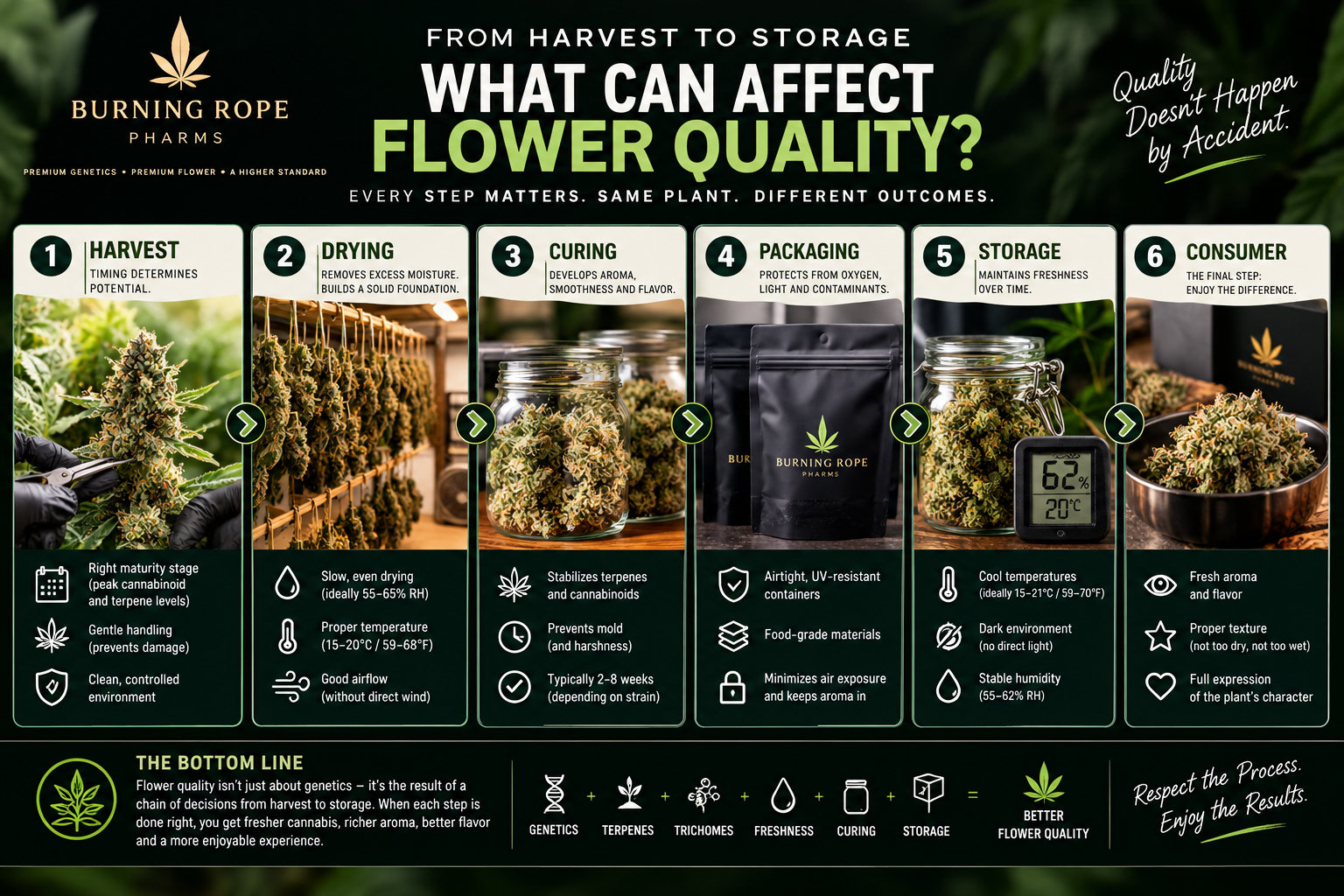
Genetics establish the foundation. Cultivation influences plant development. Harvesting, drying and curing shape the post-harvest material. Storage conditions then become important for maintaining its characteristics over time.
Trichomes, terpenes, aroma, moisture, appearance and cannabinoid information can all contribute useful information, but none should automatically be treated as a universal quality score.
For consumers interested in understanding cannabis rather than simply chasing numbers, the better question isn’t: