
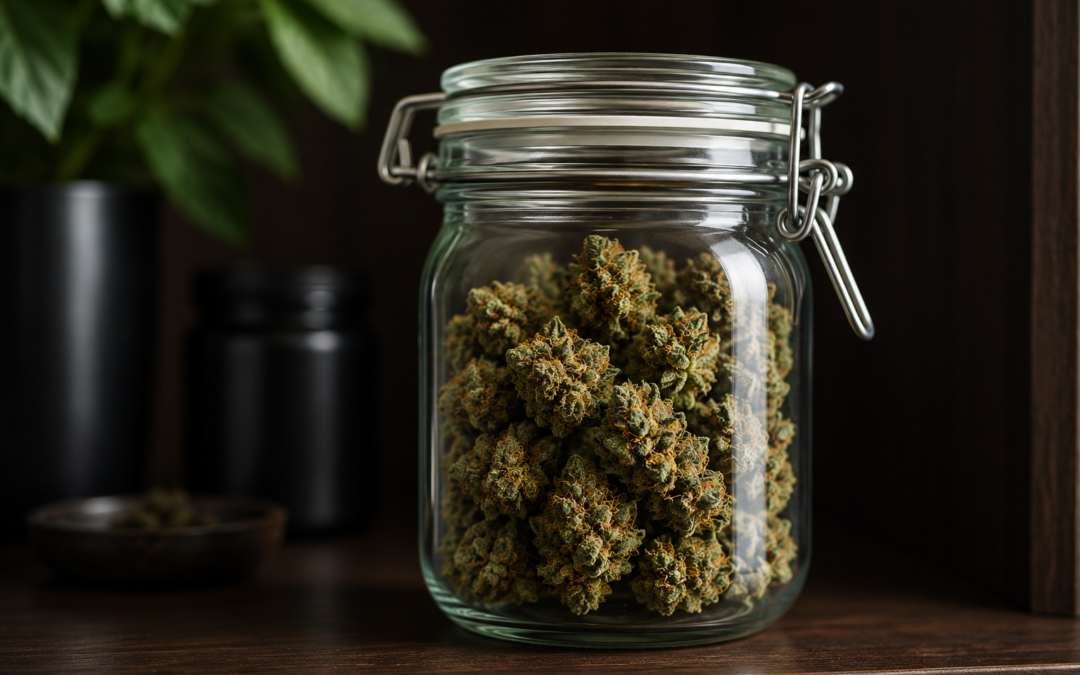
Knowing how to store cannabis flower properly can make a significant difference in how well it maintains its aroma, texture, and overall condition over time. Light, air, heat, moisture, and the type of container used for storage can all influence cannabis after it has been packaged.
This guide explains the basic principles of cannabis flower storage, common mistakes to avoid, and practical ways to protect flower from unnecessary environmental exposure.
Why Proper Cannabis Flower Storage Matters
Cannabis flower is plant material, so its condition can change after harvesting, drying, and curing. Poor storage may expose it to excessive light, oxygen, heat, or moisture.
Proper storage is therefore less about finding a complicated technique and more about creating a stable environment.
Research examining the stability of cannabis has found that exposure to light can contribute significantly to cannabinoid degradation. Air exposure can also contribute to changes over time.
That makes three principles particularly important: protect the flower from unnecessary light, avoid excessive air exposure, and maintain appropriate environmental conditions.
1. Protect Cannabis Flower From Light
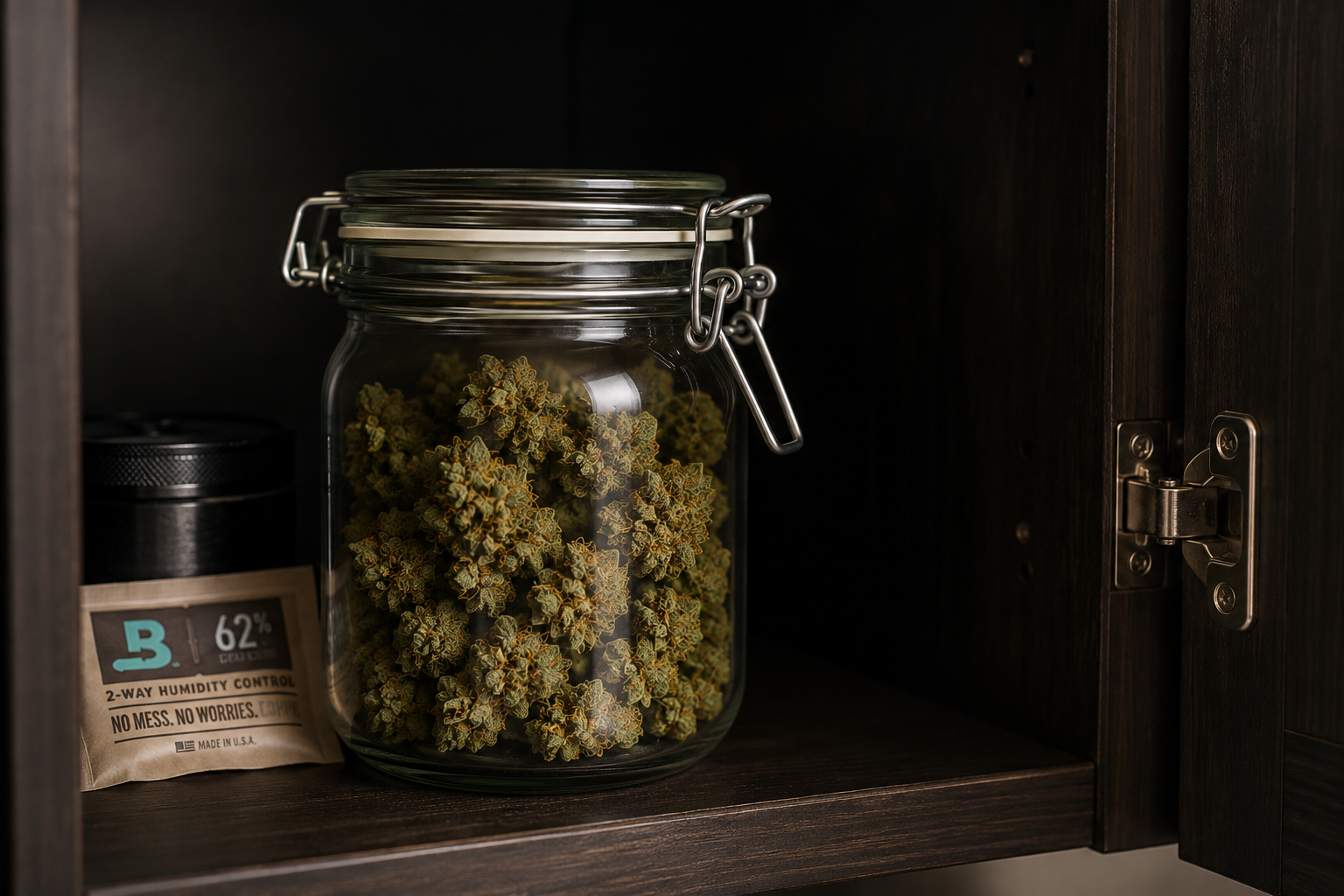
Light is one of the first factors to consider when deciding how to store cannabis flower.
Leaving flower in direct sunlight or continuously exposing it to bright light is unnecessary and may accelerate chemical changes within the plant material.
Instead, choose a dark storage location such as a cabinet, drawer, or other enclosed area away from direct sunlight.
An opaque container can provide additional protection, while dark-tinted glass may reduce light exposure compared with completely transparent containers.
2. Use an Appropriate Airtight Container
The container is another important part of cannabis storage.
A clean, properly sealed glass jar is commonly used because it creates a relatively controlled storage environment without exposing the flower to the surrounding air continuously.
Choose a container appropriate for the amount being stored. An unnecessarily large container leaves more empty air space inside.
Containers should also be clean and completely dry before flower is placed inside them.
3. Keep Storage Conditions Stable
Extreme environmental changes aren’t ideal for dried plant material.
Rather than repeatedly moving cannabis between hot and cold environments, keep it somewhere with relatively stable conditions and away from obvious heat sources.
Avoid locations such as:
- Windowsills exposed to sunlight
- Areas beside heaters
- Hot vehicles
- Damp rooms
- Locations experiencing large temperature swings
A cool, dark, stable location is generally more appropriate for routine storage.
4. Pay Attention to Moisture
Moisture deserves particular attention because both excessive dryness and excessive humidity can affect stored plant material.
Excess moisture can create conditions favorable to microbial or mold growth. Flower that becomes excessively dry, meanwhile, may lose desirable sensory characteristics.
Never introduce water directly into a container in an attempt to restore moisture.
If flower shows visible mold, unusual fuzzy growth, or other signs of contamination, it should not be used.
5. Avoid Unnecessary Handling
Frequently opening a storage container exposes its contents to fresh air and changing environmental conditions.
Handling can also physically damage the delicate structures on the flower.
If you have a larger quantity, separating it into smaller containers can reduce how frequently the entire amount must be exposed whenever the container is opened.
Glass vs. Plastic for Cannabis Storage
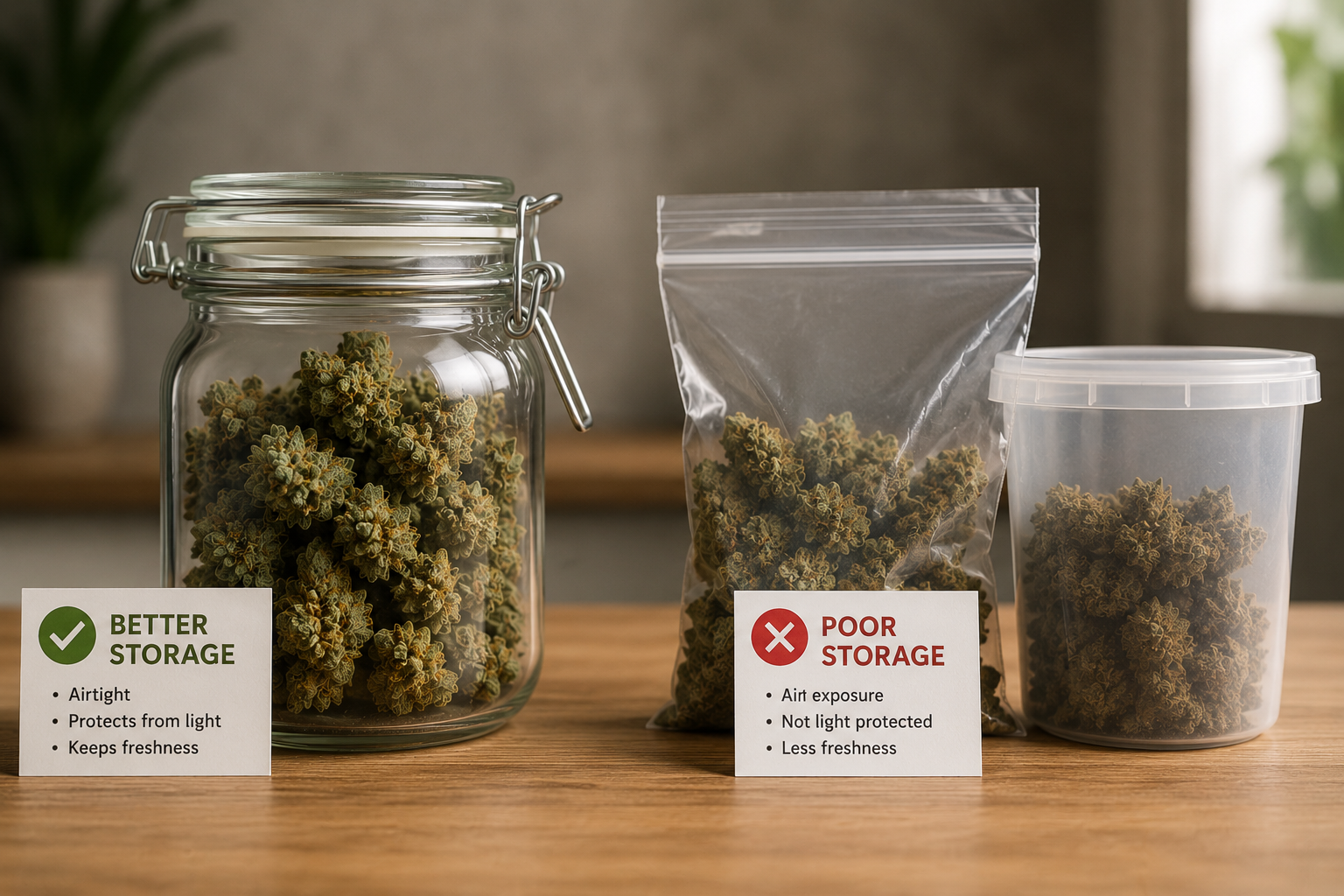
For longer-term storage, glass containers have several practical advantages.
Glass is easy to clean, does not readily absorb odors, and a quality glass jar can provide an effective seal.
Plastic bags and containers can still be useful for temporary packaging or transportation, but they aren’t necessarily the best choice for extended storage.
Whatever material you choose, cleanliness, dryness, light protection, and an appropriate seal remain important.
Common Cannabis Storage Mistakes
Understanding how to store cannabis flower also means knowing what to avoid.
Common mistakes include leaving flower in direct sunlight, storing it close to heat, repeatedly exposing it to open air, using wet or dirty containers, and ignoring signs of excessive moisture.
Another mistake is assuming that storage can preserve flower indefinitely. Storage can help slow undesirable changes, but it cannot completely stop natural degradation.
How Long Can Cannabis Flower Be Stored?
There isn’t one universal expiration date that applies to every sample of cannabis flower.
Its condition depends on factors including how it was originally dried and cured, its packaging, environmental exposure, and storage conditions.
Research has demonstrated that storage conditions can affect cannabinoid stability, particularly exposure to light and air.
Instead of relying exclusively on a date, pay attention to the physical condition of the material and whether there are signs of contamination or improper storage.
A Simple Cannabis Flower Storage Checklist
For everyday storage, remember these basic principles:
- Keep cannabis away from direct light.
- Use a clean, dry container.
- Minimize unnecessary exposure to air.
- Avoid excessive heat.
- Avoid excessive moisture.
- Keep storage conditions reasonably stable.
- Check stored flower periodically for signs of contamination.
Final Thoughts
Learning how to store cannabis flower doesn’t require an elaborate setup. The goal is simply to protect the plant material from environmental conditions that can accelerate deterioration.
Light, air, moisture, temperature, and the storage container all matter. A clean, properly sealed container kept in a dark and stable environment provides a sensible foundation for maintaining stored cannabis flower.
Good storage cannot make a product last forever, but thoughtful storage practices can help protect its condition and reduce unnecessary environmental exposure. PubMed found that light exposure was particularly important to cannabinoid loss and that air oxidation also caused losses.

Trackbacks/Pingbacks